


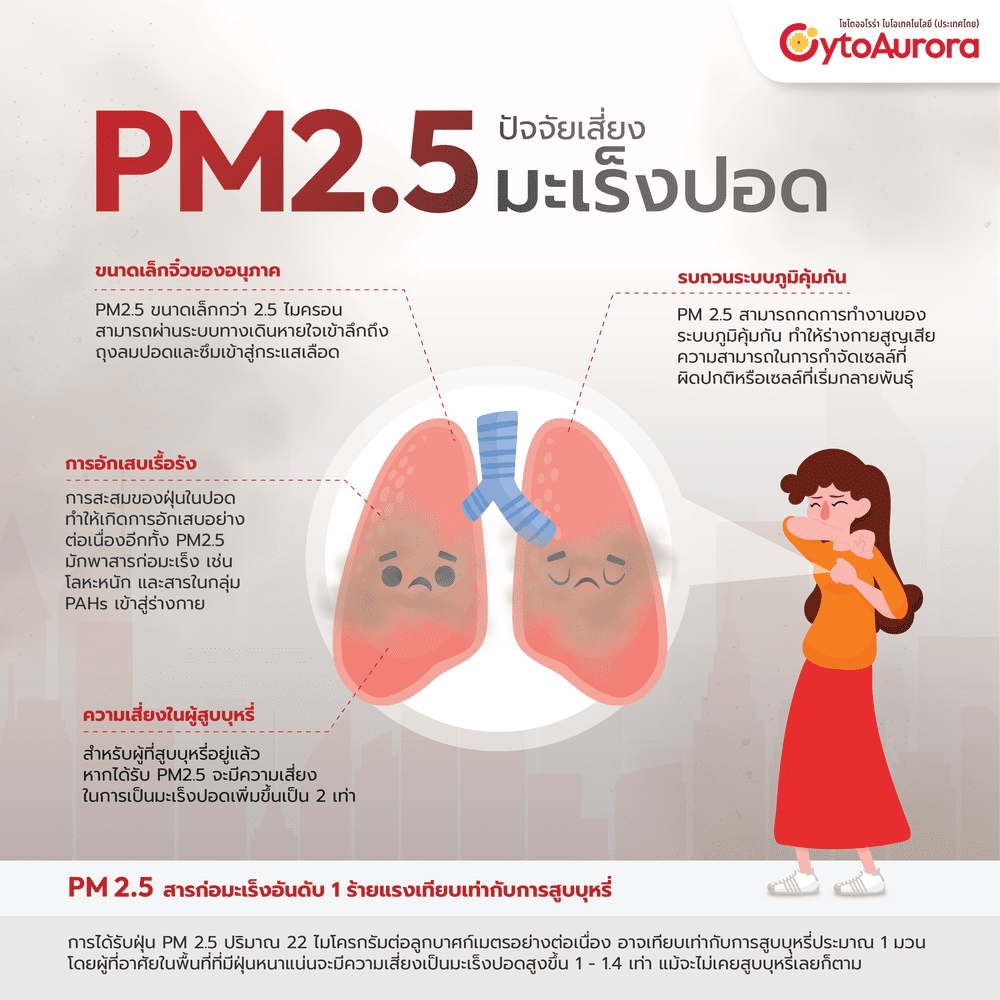
In Thailand, PM2.5 air pollution continues to be a persistent problem, especially in major cities and northern regions. Long-term exposure may affect health and increase the risk of lung cancer.
What is PM2.5?
PM2.5 refers to very fine particulate matter in the air with a diameter of no more than 2.5 micrometers (about 20–30 times smaller than a human hair). These particles are too small to be seen with the naked eye and can remain suspended in the air for long periods, making them a common air pollutant, especially in urban areas.
Sources of PM2.5
PM2.5 can originate from both direct and indirect sources, such as:
Vehicle emissions, especially diesel engines
Burning activities such as forest fires, waste burning, and agricultural burning
Industrial factories and power plants
Dust from construction sites and roads
Chemical reactions of pollutants in the atmosphere
Why PM2.5 is a Lung Cancer Risk Factor
Extremely small particles: PM2.5 can penetrate deep into the respiratory system, reaching the alveoli in the lungs, and some particles may even enter the bloodstream.
Chronic inflammation: Continuous accumulation in the lungs can cause long-term inflammation. PM2.5 may also carry carcinogens such as heavy metals and PAHs (polycyclic aromatic hydrocarbons).
Immune system disruption: PM2.5 can weaken immune function, reducing the body’s ability to eliminate abnormal or mutated cells.
Higher risk for smokers: Smokers exposed to PM2.5 have up to twice the risk of developing lung cancer.
Prevention
Wear a protective mask (N95 / KN95) when air pollution levels are high
Avoid outdoor activities during high PM2.5 levels
Use air purifiers at home or in bedrooms
Keep doors and windows closed to reduce indoor pollution
Check air quality regularly before going outside
Drink enough water and get adequate rest
People who work outdoors or are exposed to long-term pollution should undergo regular lung cancer screening
High-Risk Groups
Young children
Elderly people
Patients with lung disease, asthma, or heart disease
Pregnant women
Outdoor workers
Smokers
PM2.5 as a Major Carcinogen
PM2.5 is considered a major carcinogenic air pollutant, with risks comparable to smoking. Continuous exposure to an average of 22 micrograms per cubic meter may be equivalent to smoking about 1 cigarette per day. People living in heavily polluted areas may have a 1–1.4 times higher risk of lung cancer, even if they have never smoked.
For more news and health information, follow us at:
Line: @cytohealthcare (don’t forget the @)
Website: https://www.cytoaurorathailand.com/